Updated · StaffUniform.pk
The short answer
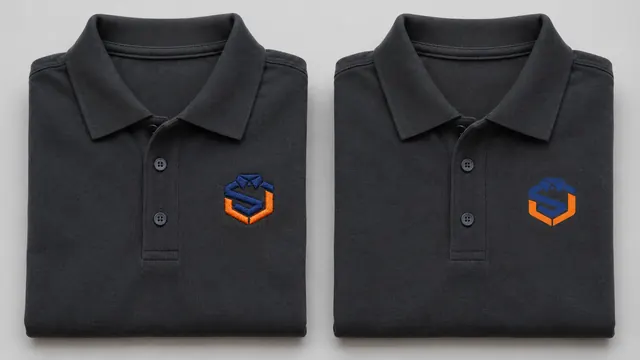
Embroidery stitches your logo into the fabric with thread, so it looks raised and lasts through frequent washing. Printing applies ink or a film to the surface, which handles full-colour artwork and large designs more easily.
| Embroidery | DTF printing | Screen printing | Sublimation | |
|---|---|---|---|---|
| Look | Raised, textured | Smooth, full colour | Flat, bold colour | Dye inside fabric |
| Best for | Chest logos, caps, names | Detailed artwork, small runs | Same design on many shirts | All-over designs |
| Garments | Polos, shirts, chef coats, caps, jackets | T-shirts, hoodies, back prints | T-shirts, event shirts | Polyester only |
| Quantity | From 1 piece | Small to medium | Larger runs | Small to large |
When embroidery is the better choice
Embroidery suits uniforms that are worn and washed every day and need to look professional, such as corporate shirts, polos, chef coats and lab coats.
- Small left-chest company logos
- Employee names and designations
- Caps and thicker fabrics such as jackets
- Uniforms washed several times a week
When printing is the better choice
Printing suits large designs, photographic or gradient artwork, and promotional garments that need bold visibility.
- Large back logos on rider and event T-shirts
- Full-colour artwork with gradients
- Campaign messages and event branding
- Lightweight sports fabrics (sublimation on polyester)
Using both on one uniform
A common layout is an embroidered left-chest logo with a printed back design. This gives a premium front and high visibility from behind, for example on rider jackets or event crew shirts.
Preparing your logo
Send a vector file (AI, EPS, SVG or PDF) if you have one. A clear, high-resolution PNG also works. Very fine text may need to be enlarged or simplified for embroidery; we advise before production.